Blog
How to sell subscriptions and memberships online in 2026
One-off sales feel great, but every new customer restarts the marketing cycle. Subscriptions and memberships flip the math by turning a single conversion into months of recurring revenue. Here's how creators are building, pricing, and retaining members in 2026.

A one-off digital sale feels great in the moment. The notification hits, the money lands, and you move on. But every new sale starts the marketing cycle from scratch, which costs you time, money, and energy you could spend creating.
Subscriptions and memberships flip that math. You convert a customer once and keep earning from them month after month, which steadies your cash flow and compounds the value of every piece of marketing you do. This guide walks through what works in 2026, with real seller examples, current tooling notes, and tactics for keeping members around longer than the average creator app retains them.
Why subscriptions and memberships beat one-off sales
Recurring revenue gives you something a Stripe payout from a single product can't: predictability. Once you know roughly what each member is worth over their lifetime, you can plan content, hires, and ad spend with confidence.
A few of the practical wins:
- Recurring revenue you can forecast against
- Higher profit per customer because you spread acquisition cost over many months
- Less time chasing new buyers, more time creating
- Smoother cash flow, which makes paying yourself less stressful
- A library that becomes more valuable to new members the longer you run it
If you're still figuring out where subscriptions fit alongside one-off products, our guide to building a sales funnel for digital products is a good companion read.
What you can sell as a subscription or membership
Almost anything you can deliver online can be packaged as a recurring product. The constraint is value, not format. If your audience would pay you again next month for fresh access, you have a subscription business.
Here are four creator examples that show the range.
Digital publications
Instead of (or alongside) selling individual issues, you can charge a recurring fee for ongoing access to your library and every new release.
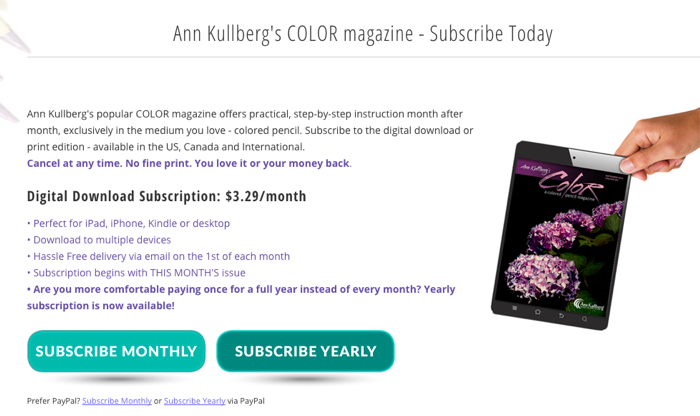
Ann Kullberg uses this model with her coloured pencil magazine. Members get the new issue plus the back catalogue, and she still sells individual products to readers who aren't ready to commit. The recurring tier turns one purchase decision into a long-term creative relationship with her audience.
Coaching and consultancy
If you're an authority in your field, packaging your expertise into a recurring program works well. Members get ongoing access to lessons, templates, and often a community for peer support.
A digital marketer might sell ongoing growth playbooks to small business owners. A communications expert might run a certification program that drips lessons over months instead of asking people to take a week off for a conference.
Dan O'Connor runs his communications training as a recurring membership with a 7-day free trial. The trial gives potential members a low-risk way to test the content before committing.

Access to a community
Targeted, well-moderated communities are one of the most defensible subscription products you can build, partly because the value grows with every member who joins.
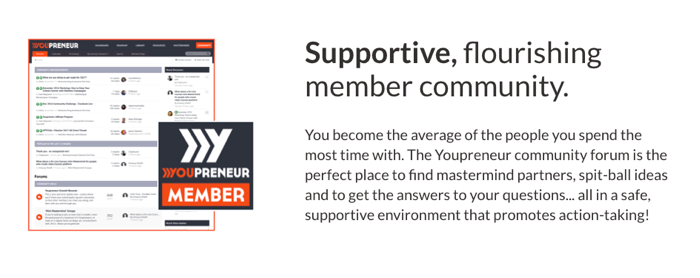
Chris Ducker's Youpreneur community is a long-running example, charging a monthly fee for access to the network and content. Communities like Circle, Mighty Networks, and Discord-based memberships have made this model accessible to creators of any size.
Niche skill instruction (yes, even dressage)
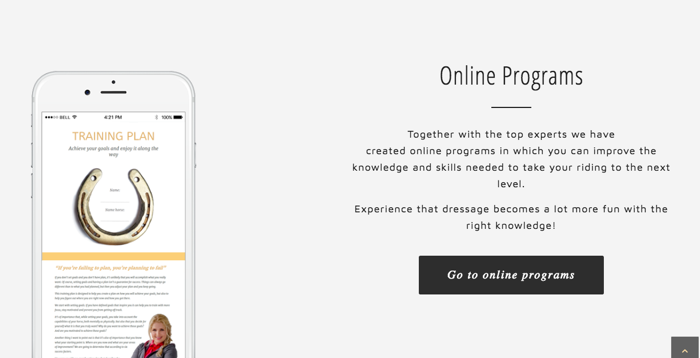
To prove the model stretches anywhere, consider Dressage Pro, which sells online courses for people training horses to perform precision movements. Enrollment opens only twice a year, in spring and autumn. That supply restriction creates urgency and exclusivity, two of the most effective conversion levers in subscriptions.
The lesson here: a passionate audience plus structured content equals a recurring product, regardless of how niche the topic feels.
How to actually sell subscriptions and memberships
You have a few structural choices to make before you pick tooling.
The two most common setups are:
- Library access: members pay a recurring fee to access all (or a tier) of your products
- Drip releases: members receive new content on a schedule, like a new lesson each week or a new issue each month
Both work. The right pick depends on whether your value is "I keep making new things" or "I have a deep catalogue worth ongoing access to."
Using a digital delivery platform
Your first instinct might be to search for "membership platforms," but a digital delivery service often covers everything you need, especially if you're dripping content rather than building a full members-only site.
With SendOwl you can control:
- How often a customer is billed
- Whether they pay for a fixed number of cycles or ongoing
- Whether you offer a trial (paid or free)
- What you sell, whether that's audio, video, PDFs, courses, or services
- How often new content is dripped to active members
- Whether members see the entire catalogue or a tier
- Cancellation, dunning, upgrade, and downgrade flows
Delivery is automatic and secure, which matters when you're shipping the same files to hundreds or thousands of paying members. SendOwl handles checkout, integrates with Stripe and PayPal, and gives you the marketing tools (discount codes, abandoned cart, upsells) you need to grow the funnel.
If you haven't priced your subscription yet, our guide to pricing digital products covers the math and the psychology.
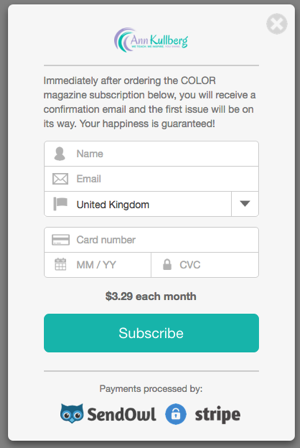
Going back to Ann Kullberg, here's what her checkout looks like when a customer hits subscribe. She added explanatory text up top and trust icons at the bottom. You can keep yours simpler if you want.
Membership platforms
A digital delivery service isn't the same as membership software. If you specifically need a gated members-only area with profiles, comments, courses, and forums, look at platforms like MemberMouse, Circle, Mighty Networks, or Kajabi. Each handles the "behind the wall" experience differently.
Tools like SendOwl integrate with these platforms, so you can use SendOwl for checkout, billing, and digital delivery while a community tool handles the gated experience. Pick based on where your subscribers will spend the most time.
How to convert more first-time subscribers
Selling a subscription means convincing someone they'll get good value not just today but every month they stay. The conversion rate hurdle is higher than for one-off products, so the offer has to do more work.
Tactics that consistently move the needle:
- Offer a free or heavily discounted trial so people can experience the content before committing
- Show sample content publicly, whether that's a free issue, a sample lesson, or a public archive of past releases
- Open enrollment in cohorts to create urgency, the way Dressage Pro and many course creators do
- Make cancellation obvious and one-click, which sounds counterintuitive but reduces purchase anxiety
- Bundle a high-perceived-value bonus on signup, like a starter kit or a private onboarding call
- Strip friction from your checkout, since every extra field costs you conversions
If you're using a free lead magnet to feed the funnel, our guide to free downloads and free orders shows how to set those up cleanly. For broader context on what makes recurring billing work as a business model, Stripe's guide to subscription business models is a useful read.
How to keep members around longer
Acquisition gets the headlines, but retention is where subscription businesses make their margin. A member who stays 18 months is worth roughly six times one who churns at month three, even if your monthly price is identical.
Retention plays that work:
- Deliver a clear "first win" within the first week, even if your model is built around future content. New members need a reason to log back in tomorrow.
- Optimise content for mobile and offline. Most members will consume on a phone, often without strong wifi, so streaming-only experiences underperform.
- Offer downloads where it makes sense. Some members want to keep things on their device for travel, the gym, or commutes.
- Run a quarterly listening loop. Survey members, read cancellation reasons, and ship at least one improvement based on what you hear. Members who feel heard renew.
- Send a "what's coming" preview at the start of each month. Anticipation reduces cancellations more than any discount.
If your subscription crosses borders, brush up on tax and VAT basics for digital sellers before you scale, since recurring billing across regions adds compliance steps you don't want to discover during an audit.
Frequently asked questions
How much should I charge for a subscription?
Start with the value of one month of access compared to the equivalent one-off purchase. Most creator subscriptions land between $9 and $79 per month, with annual plans discounted 15 to 20 percent. Test with cohorts before locking pricing in.
Should I offer monthly, annual, or both?
Both. Monthly lowers the barrier to entry and helps with conversions. Annual plans collect more cash upfront, smooth out churn, and signal commitment from members who are serious. A roughly 60/40 monthly-to-annual split is healthy.
How do I handle failed payments and dunning?
Use a billing platform that retries failed cards automatically and emails members before their card expires. SendOwl, Stripe, and most modern billing platforms handle this. Manual chasing kills retention.
Do I need to refund if someone forgets to cancel?
Your refund policy is yours to set, but a one-click cancellation flow plus a "soft refund" for members who cancelled within 24 hours of a charge tends to protect your reputation without costing much revenue.
Make 2026 the year recurring revenue carries you
A subscription business stops being a hustle once you have a few hundred paying members. Marketing compounds, content compounds, and the calmer cash flow lets you focus on building instead of selling.
Pick the model that fits your audience, ship a small first version, and iterate based on what your members actually use.
SendOwl makes selling subscriptions and memberships simple. Set your billing terms, upload your content, drip releases on the schedule you choose, and share your checkout link anywhere your audience already follows you. Get started selling digital products for free today.

community
Join our newsletter for the latest tips, updates,
and exclusive offers to supercharge your digital product sales.