Blog
How a Final Fantasy fan turned game analysis into a book business
Darryl has spent nearly two decades building Final Fantasy Union. When he was made redundant from his day job last year, he had 325,000 YouTube subscribers, two books that crowdfunded in minutes, and a business that was ready to catch him.

Darryl has spent nearly two decades building Final Fantasy Union. When he was made redundant from his day job last year, he had 325,000 YouTube subscribers, two books that crowdfunded in minutes, and a business that was ready to catch him.
Final Fantasy Union started in 2008 as a news portal and podcast. The YouTube channel came eight years later, and that's where Darryl's deep-dive analysis of Final Fantasy themes and topics found its audience, celebrating the franchise's fandom with a depth that didn't exist anywhere else. His wife Lauren ran editing and the visual side in those early years before stepping away to focus on her career as an influencer manager. She still cheers the project on, and Darryl now runs day-to-day production with freelance editors. What they started has grown steadily, never chasing trends, never buying growth.

It was Lauren who pushed them to start. She saw another creator doing well on YouTube and said, essentially, if they can do it, we can do it too. Darryl had never written a script. He'd never done voiceover or anything related to running a YouTube channel. But Lauren took on the editing while Darryl focused on writing, and they figured it out as they went. "We just kept uploading stuff until we found our voice," he says.
Then came the books.
Publishers said no
Darryl wanted to write a book that went deeper than anything the channel could cover. An encyclopedic history covering 135 Final Fantasy games from 1987 to 2021. He pitched it to publishers, and they all turned him down. The common response was scepticism about whether a YouTube audience would actually buy a physical product. "Just because you have this platform, it doesn't mean anyone on that platform is going to be interested in buying a book from you," they told him.
So he crowdfunded it instead. The campaign for The Legacy of the Crystal set an £8,500 goal on Kickstarter. Darryl spent the first hour in a state of panic, refreshing the page and waiting for the worst case to hit (apathy?, indifference?). But it got funded within 90 minutes. By the time the campaign closed, 1,695 backers had pledged £114,184, more than clearing the target by 1,000%.
That single result told him everything he needed to know about his audience. These weren't passive viewers, but fans who trusted his work enough to pay for it before it existed.
3,000 books and figuring out fulfilment
The Legacy of the Crystal has sold over 3,000 copies across the Kickstarter campaign and reprints. Darryl and Lauren handled fulfilment themselves, storing 2,000 copies in their home. The first wave taught them a hard lesson about packaging. The initial provider was terrible, and a decent number of buyers complained about the condition their books arrived in. They found a better packaging provider for subsequent shipments and sent out replacements where needed.
Previous merchandise experiments (t-shirts, mugs) had flopped. Nobody was interested. The books worked because they matched what the audience actually valued: Darryl's analysis, presented with the care and depth they'd come to expect from the channel. "We needed to find the right product," he says. "The audience was there. They were just waiting for us to do the thing they actually really wanted."
What surprised him was the secondary market. Copies started appearing on eBay at marked-up prices, and people were buying them. He'd kept about 200 spare copies and listed them on SendOwl. Most sold within a month. The eBay signal was clear: he was leaving money on the table.
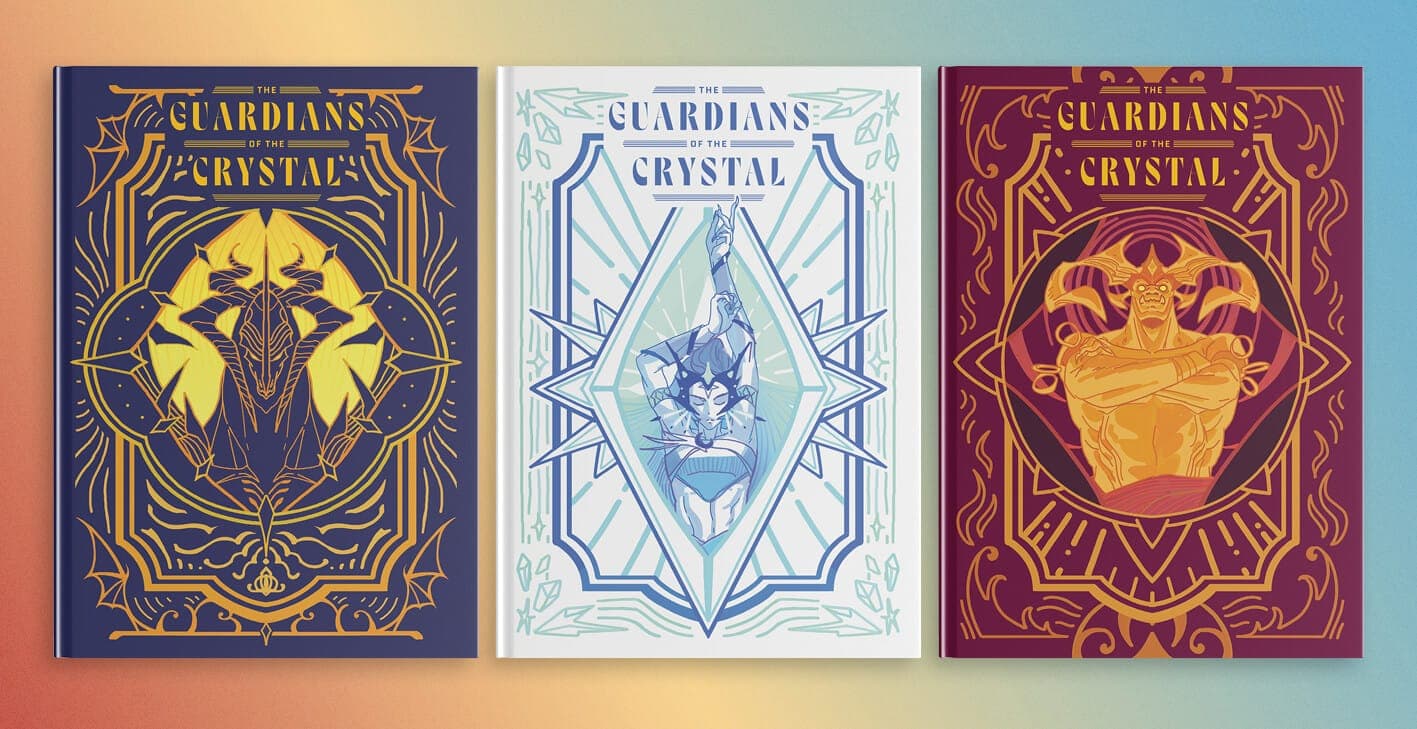
His second book, The Guardians of the Crystal: An Encyclopedia of Summons, covered 88 summonable beings across mainline Final Fantasy games. It featured a foreword by Ben Starr, the voice of Clive in Final Fantasy XVI, and came in three cover variants: Shiva, Ifrit, and Bahamut. That Kickstarter funded in 14 minutes, raised over £56,000, and hit 700% on day one. Multiple tiers sold out before the campaign ended.
Both books are now available as digital PDFs through SendOwl at £12.50 each, protected with PDF stamping.
Fifteen minutes a day
The first book ran to roughly 60,000 words. The scale of it could have been paralysing, and for a while it was. Darryl was working full time, running the YouTube channel, and raising two kids. He needed a system that fit into the gaps.
The rule was simple: write for 15 minutes every day. Some days, 15 minutes turned into hours when flow state kicked in. Most days, it was just 15 minutes. He aimed for five days a week, with weekends as makeup time. "Sometimes I would do six days, seven days. Some weeks maybe four or five. But I was still just trying to do the time. And gradually, over time, it just kind of writes itself."
His daily routine puts cognitive-heavy tasks first. Writing and recording happen in the morning, when his focus is sharpest. Afternoons are for admin, research, editing, and coordinating with the team. "Once the kids come home from school, then it's a write off," he says. That structure protects the creative work from getting buried under operations.
The redundancy that wasn't a crisis
When Darryl was made redundant from his day job last year, it could have been a disaster. Two kids, a mortgage, no salary. But years of conservative financial planning had built a buffer, and the creator business was already generating real revenue.
"It wasn't a welcome change, but it wasn't an unwelcome change," he says. "Taking a risk is always hard, and sometimes the risks are forced upon you, and then you have to try and figure out how to make it work."
He'd actually committed to writing the second book at the start of the year. Then he got made redundant a week later. "It's not a nice to have anymore. It's more of a necessity." The forced timeline turned a project he'd been mulling over for a year into something that had to ship. Without the safety net of a salary, finishing became urgent in a way it hadn't been before.

Building community the slow way
The Final Fantasy fandom is famously divided. Fans of different eras of the franchise can be tribal and dismissive of each other. "You like that game? I don't particularly like you." That kind of thing. Darryl and Lauren took a deliberate approach from the start: inclusion first, no artificial growth tactics, no aggressive promotion.
"We made it very clear with our community early on that that was going to be what our community was about: inclusion. If you're going to be toxic, then this isn't the community for you," he says.
He didn't appoint moderators. He waited for them to emerge naturally. People who consistently showed up, who reflected the tone Darryl set, gradually became the ones who carried the culture forward. "I didn't need some fancy title on them for that to be known. It's just what the community knows itself." It took about two years before the community started policing itself.
The community now spans YouTube, Discord, a Patreon, and a Substack newsletter called the Wark Digest. The balance is constant: creator passion, audience expectations, and broad enough appeal to keep growing without alienating the core. "If you go too far into doing what you want to do, then you miss the fact that your community is expecting things of you. If you go too far in the community side, you may lose the passion because you're not making what you want to make anymore."
Customer support as community building
Darryl handles customer service personally. Every email. Every message. When packages go out after a launch, he tracks individual responses to 30 or 40 people using tracking codes through SendOwl.
He had the opportunity to work with publishers for the second book and turned it down. "I wanted to be responsible. If something's gone wrong, I don't want to be able to blame someone else for it. I wanted to be connected to everything."
The most common feedback he gets is surprise. "I can't believe you actually responded to me. I'm such a fan of yours." Those interactions build loyalty in a way that automated responses never could, and they feed back into his understanding of what the audience wants next.
It's also why his SendOwl traffic spikes correlate perfectly with his launch campaigns. When Darryl announces something, the audience moves. There's no lag, no warming period. They trust him, and they buy.
When the kids finally got it
Darryl's children are 7 and 10. His oldest is autistic. When the first book came out four years ago, they didn't fully understand what was happening. This time, with 2,000 books stacked in the house, they got it.
"They've been going around telling everyone that I'm an author," he says. He put a dedication to them in the opening pages, and seeing their names in print blew their minds. They wanted the add-on stickers and pin badges, plastered them around their rooms. The YouTube channel never impressed them much ("I don't play Fortnite or Pokemon or Minecraft"), but a physical book they could hold and show people made the whole thing real.
Sustainability keeps getting redefined
Ask Darryl what sustainability means and the answer changes depending on when you ask. Before kids, it meant covering rent. After kids, it meant covering childcare. After promotions and pay rises at the day job, the number kept climbing. "That definition of sustainability in terms of what are you willing to give up, it was constantly changing."
The thread running through all of it is conservative planning. He never spent ahead of revenue. He built a buffer before he needed one. When the floor dropped out, the business was there. "I haven't really felt the pressure for things to work, which is nice because it just means that it is sustainable."
Three thousand copies of the first book sold. The second funded in 14 minutes. The eBay resales told him every future release will move faster than the last. He's recently launched a second YouTube channel chronicling video game history through Japanese RPGs, starting from the very first game and working forward. And all of it traces back to one person writing about the games he loves, for an audience that grew up loving them too.
Watch Darryl's deep-dive Final Fantasy analysis at Final Fantasy Union on YouTube, and browse his books at his SendOwl store.
SendOwl makes selling digital products simple. Upload your files, set your prices, and share links anywhere you connect with your audience. Get started selling digital products for free today.

Dani is the GM of SendOwl.
community
Join our newsletter for the latest tips, updates,
and exclusive offers to supercharge your digital product sales.